For the last long while, I have been on and off reading Crime and Punishment by Fyodor Dostoevsky. While I have been thoroughly enjoying the writing style and the story itself, I have struggled to read such a large novel consistently during the school term.
Recently, I was away for the holiday’s with my partner’s family where we did a secret santa gift exchange, which is how I received a copy of White Nights (and The Dream of a Ridiculous Man, but more on that in another post!). So first of all, a big thanks to my partner’s sister for the book, and to her partner for recommending it!
White Nights was a lovely start-to-finish introduction to Dostoevsky’s work for me, since it is a concise yet impactful story which follows just a few characters.
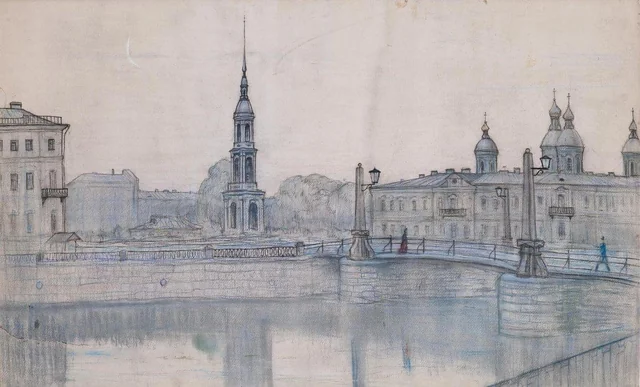
White Nights begins by describing the unnamed protagonist’s (who we will call “The Dreamer”) life of acute solitude through the illustration of his late-night walks in St. Petersburg. The Dreamer’s closest resemblance to a friendship is found in passing encounters with an older man whom he believes takes an interest in his presence.
I felt that this was a very effective way of describing The Dreamer’s extent of solitude, as I too have had habitual “pass-by people” who I believe take an interest in my presence, as I do their’s, but have never experienced them being my “closest friend”.
The Dreamer then introduces us to his deep sense of acquaintenceship with the city, and especially the houses. The Dreamer claims to “know the homes intimately” which of course contain the people he wish would speak with him. He relies on his imagination to create personifications of these houses’ personalities based on their appearances and states, which lead to fabricated conversations between him and his favourite houses, mostly pertaining to their wellbeing.
This section of the first white night really deepened my understanding of just how far The Dreamer’s solitude is. I started to shift from mostly just feeling empathy for our protagonist in his longing for a friend, to primarily feeling an eerie sense of concern for his sanity and perception of reality.